


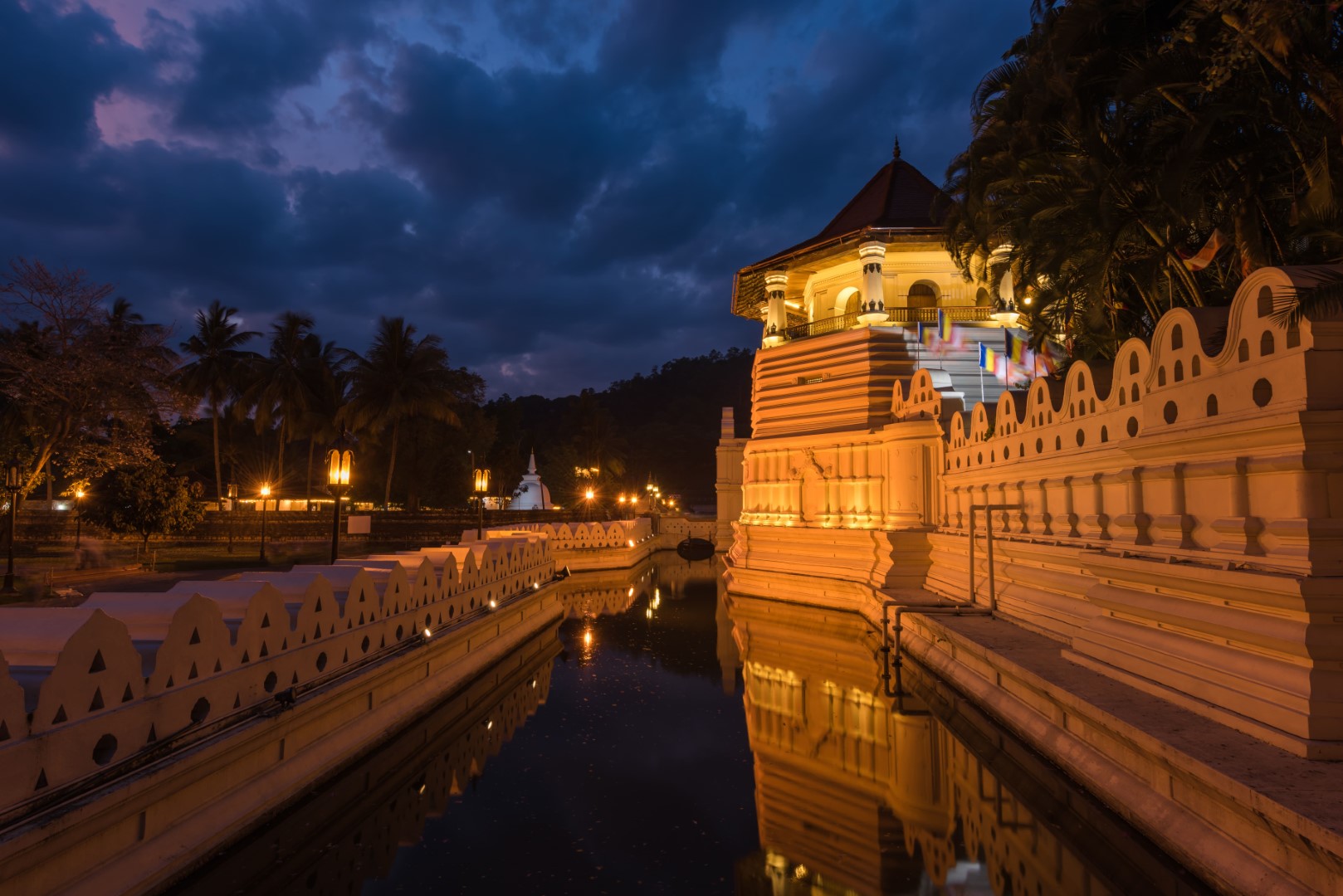


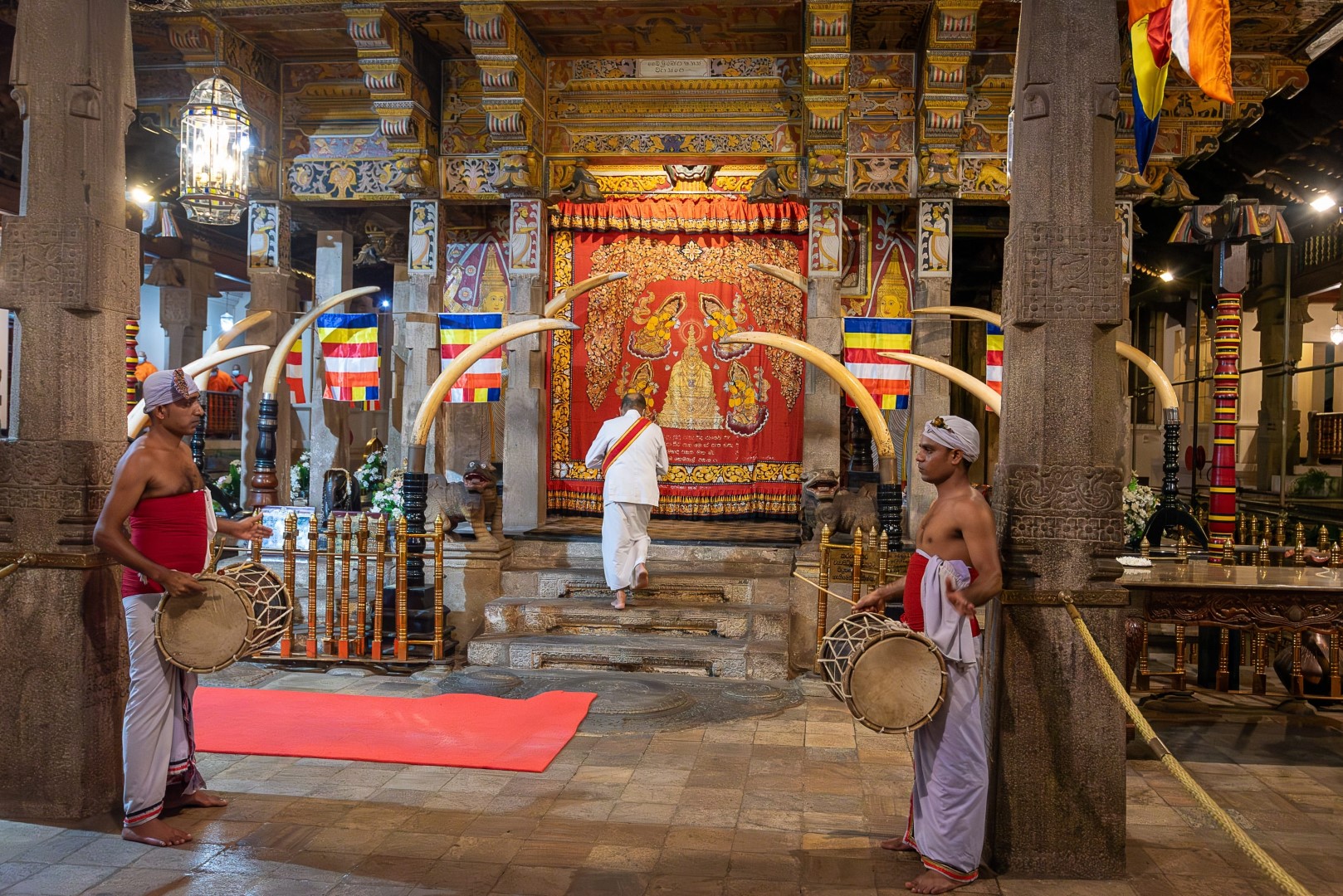
The Sri Dalada Maligawa is not simply a museum for an important Buddhist relic – it is a continuously active place of worship that has been the ceremonial centre of Sri Lankan kingship for over a thousand years. The puja ceremonies at dawn, noon, and dusk – accompanied by traditional drums, conch shells, and the offering of flowers and incense – are among the most atmospherically powerful religious experiences in South Asia. Our guide provides the historical and religious context that transforms a visit from respectful curiosity into genuine understanding.
One of the finest tropical botanical gardens in Asia, Peradeniya was originally a pleasure garden of the Kandyan kings and was developed by the British into a research institution and collection of global botanical importance. The avenue of royal palms, the orchid house, the spice garden, and the riverside walks through specimen trees collected from across the tropical world make Peradeniya a genuinely beautiful place that most visitors explore too quickly.
The lake at the heart of Kandy was created by damming a natural valley in 1807 – a feat of engineering that the last Kandyan king managed in three months using forced labour. Today it is the social and geographical centre of the city, surrounded by the cloud wall built to screen the temple from attack and backed by the hills that give Kandy its distinctive topography. Walking the lake circuit at a gentle pace, with the temple on one side and the hill country rising above, provides the best orientation to the city’s physical character.
Kandy is the centre of Sri Lanka’s traditional craft economy – the city where wood carving, lacquer work, weaving, batik, and traditional jewellery are still practised by families who have carried these skills across generations. We visit working workshops rather than retail showrooms, meeting the craftspeople in their own environment and understanding the techniques, materials, and cultural contexts that give each craft form its distinctive character. Purchasing directly from makers at these workshops provides income directly to the producers.

