


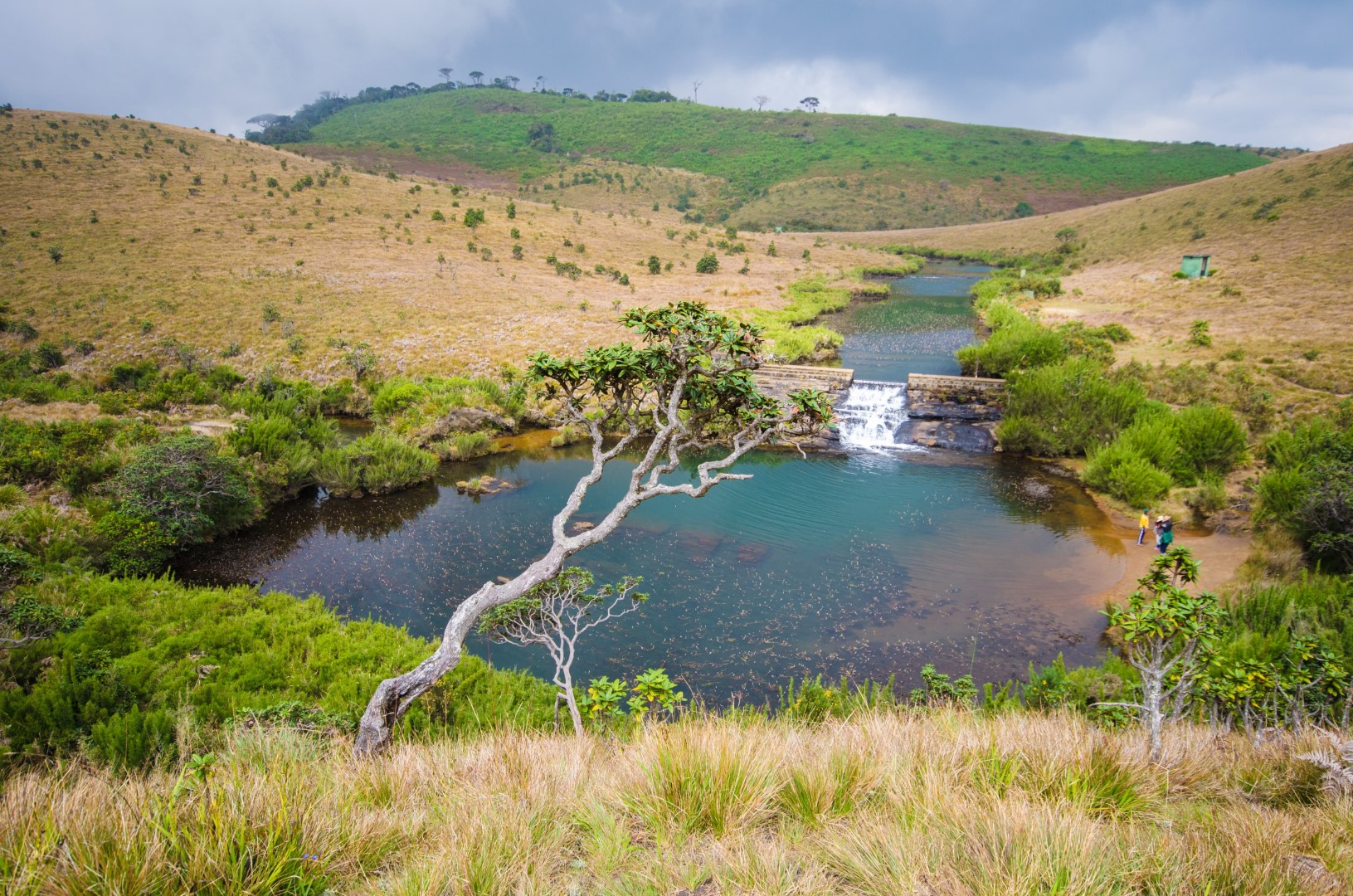


The approach to World’s End – along a path through open montane grassland with the wind coming across the plateau – builds anticipation before the escarpment itself appears. At its lip, the ground disappears and the lowland plains reveal themselves 870 metres below – a geological discontinuity of extraordinary visual power. Cloud often covers the drop by mid-morning; we time the visit to arrive before 9am for the best views.
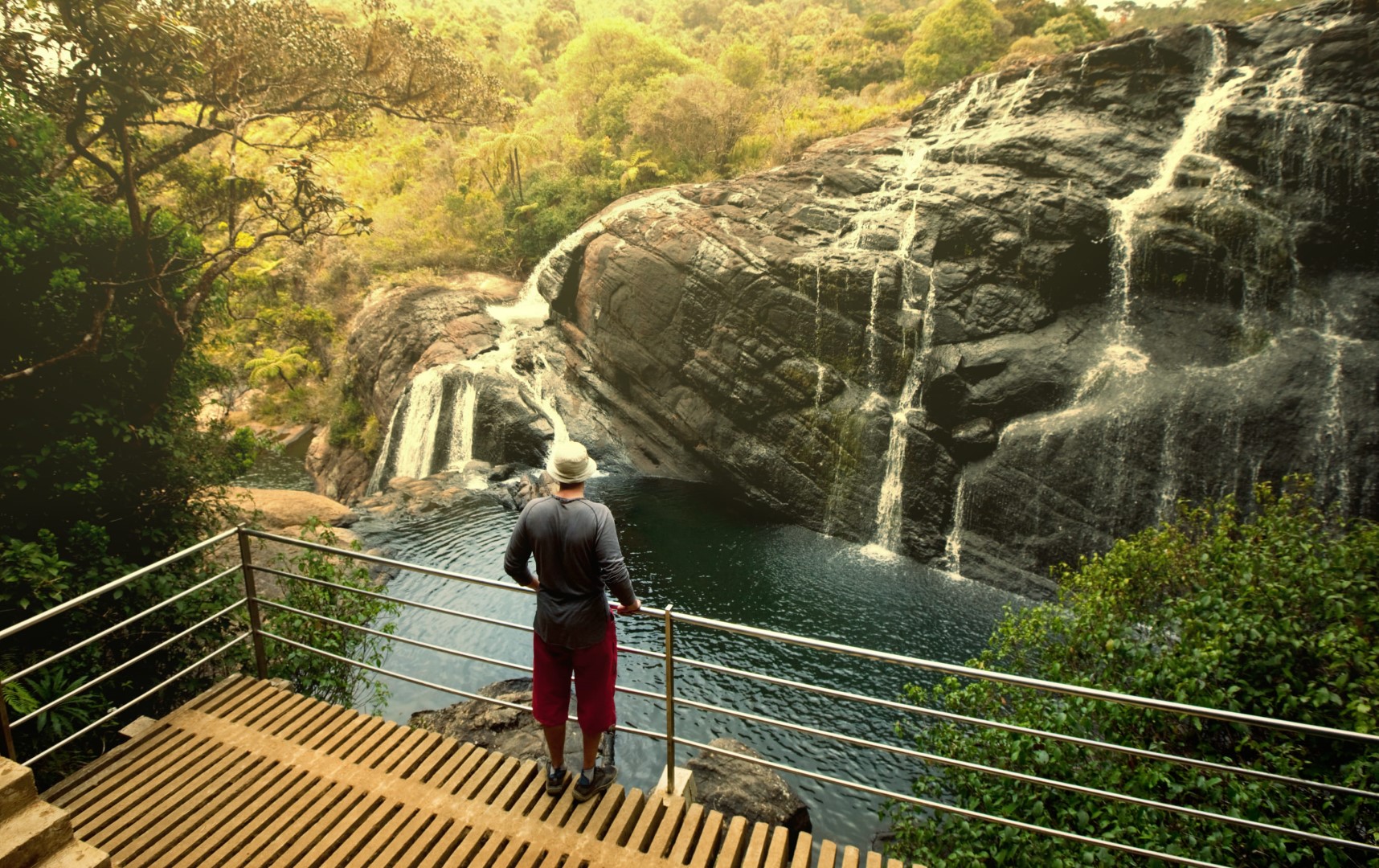
Named after Samuel Baker, who explored the Horton Plains in the 1840s, Baker’s Falls drops through a gorge of dense cloud forest vegetation to create one of Sri Lanka’s most beautiful small waterfalls – intimate in scale but set within a landscape of considerable drama. The forest around the falls supports endemic bird species including the Sri Lanka whistling thrush and the dull-blue flycatcher.
Horton Plains’ grassland ecosystem – known as patana – supports a range of endemic species including the Sri Lanka leopard (rarely seen but regularly tracked by scat evidence), the Bear Monkey (purple-faced langur), and a remarkable variety of endemic plants found nowhere else on earth. Our guide’s knowledge of the montane ecology adds scientific depth to what might otherwise be experienced purely as scenery.
The high-altitude species of Horton Plains include the Sri Lanka whistling thrush, the dull-blue flycatcher, the yellow-eared bulbul, and the Sri Lanka white-eye – birds that are found only at these elevations and whose ecological dependence on montane habitats makes Horton Plains one of their last refuges. Birding here in the early morning, before the mist closes in, is a very different experience from lowland forest birdwatching.

