What Slow Travel Actually Means
Slow travel is not a speed restriction. It is a philosophy of attention – the decision to be fully present in fewer places rather than superficially present in many. In Sri Lanka, this distinction matters more than in most destinations because the island’s greatest rewards are not the famous sites themselves but what happens in the time around them. The conversation with the temple keeper at Anuradhapura who has spent forty years in those grounds. The morning in Ella when the mist clears exactly as you step onto the terrace. The fishing family in Negombo who show you the logic of the tidal calendar in a way no guidebook has ever explained it. These things require time. They cannot be scheduled into a 45-minute site visit between transfer and check-in.
The Architecture of a Slow Sri Lanka Journey
A slow itinerary in Sri Lanka is not a shorter one – it often covers similar geographic ground. The difference is in how each destination is approached. Two nights rather than one in Ella. An evening at Dambulla rather than a hurried morning. A full day in Galle Fort without an agenda. What this structural choice produces is a qualitatively different relationship with each place – one in which arrival and departure become less dominant, and the time in between becomes the actual experience.
The practical benefits are also significant. Slow travel means less time in vehicles, which in Sri Lanka can mean the difference between a pleasant journey and an exhausting one. It means more time at lower energy expenditure. It means the kind of physical ease that allows genuine curiosity rather than the dulled observation of someone who has been moving too fast for too long.
Where Slow Travel Works Best in Sri Lanka
The Hill Country
Ella, Hanthana, Haputale – these are destinations that reveal themselves slowly. The mist arrives and departs on its own schedule. The light on the tea estates changes hour by hour. The towns have enough social and culinary interest to sustain two full days without requiring a scheduled excursion. The train journey between stations in this region is itself a three-to-five-hour experience that rewards presence and patience – and produces, consistently, one of the most beautiful travel memories available on this island.
Galle Fort
The fort’s streets are the same streets every day, but what you notice in them changes with time and attention. The first afternoon you see the colonial architecture and the art galleries. The second morning you notice the quality of light in the narrow alleys at 7am and the fishermen bringing the night’s catch past the rampart gates. The second evening you find a restaurant that has no sign and a menu that changes with the market. Galle Fort rewards two nights and an open schedule.
The Cultural Triangle
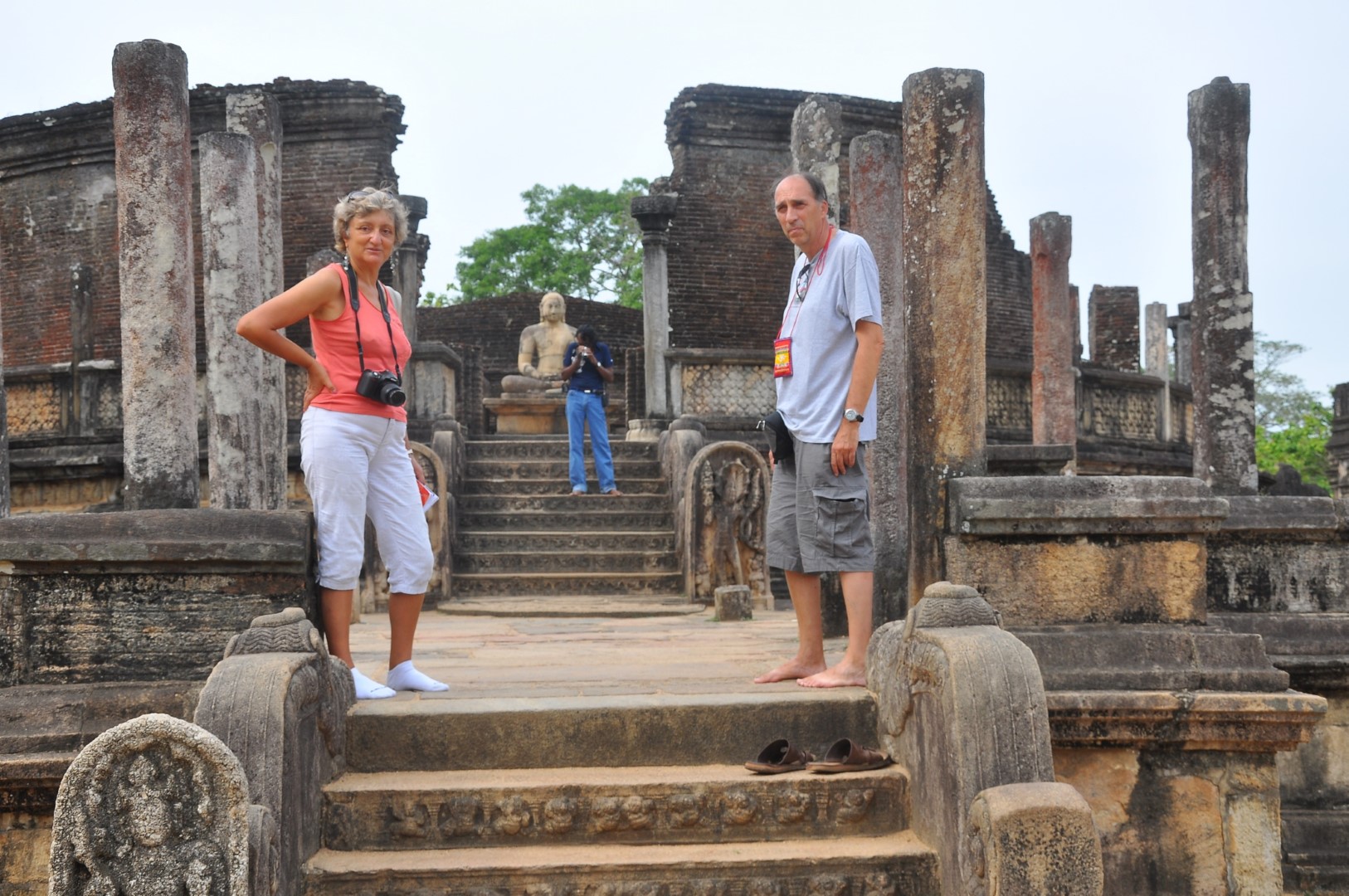
Most itineraries give the Cultural Triangle three to four days and attempt to cover Sigiriya, Dambulla, Polonnaruwa, and Anuradhapura in that window. The schedule works, technically. But each of these sites deserves half a day of calm attention at minimum, and the best experience of all of them involves an early morning visit before the tour buses arrive. A slow Cultural Triangle stay – five to six nights in the region – allows each site to be approached at the right hour, in the right weather, with the right amount of energy remaining.
The Eco-Lodge Difference
Slow travel in Sri Lanka is inseparable from the question of where you stay. The difference between a large resort hotel and a well-chosen eco-lodge or boutique property is not primarily a question of comfort – it is a question of relationship with the place you’re in. An eco-lodge in Hanthana has a naturalist on staff who takes guests birdwatching before breakfast. A boutique property in Galle Fort has a host who knows every gallery owner in the fort by name. These relationships – between property, staff, and the local environment they inhabit – are what slow travel is made of. Samen Reizen Lanka selects every accommodation in our itineraries with this principle in mind.
The Simple Case for Lingering
Sri Lanka is an island that rewards attention. Its biodiversity, its architectural heritage, its food culture, its communities, its sheer physical variety – these things are not exhausted by a single trip or a full itinerary. Every traveller who returns to Sri Lanka knows something that first-time visitors discover slowly: that what you found was extraordinary, and that there was more that you didn’t reach. Slow travel does not solve this problem – Sri Lanka is too large for any itinerary to capture completely. But it solves the most important version of the problem: the one where you come home wishing you had simply been more present in the places you were.
Allow more time. Move more slowly. Sri Lanka will fill it.