




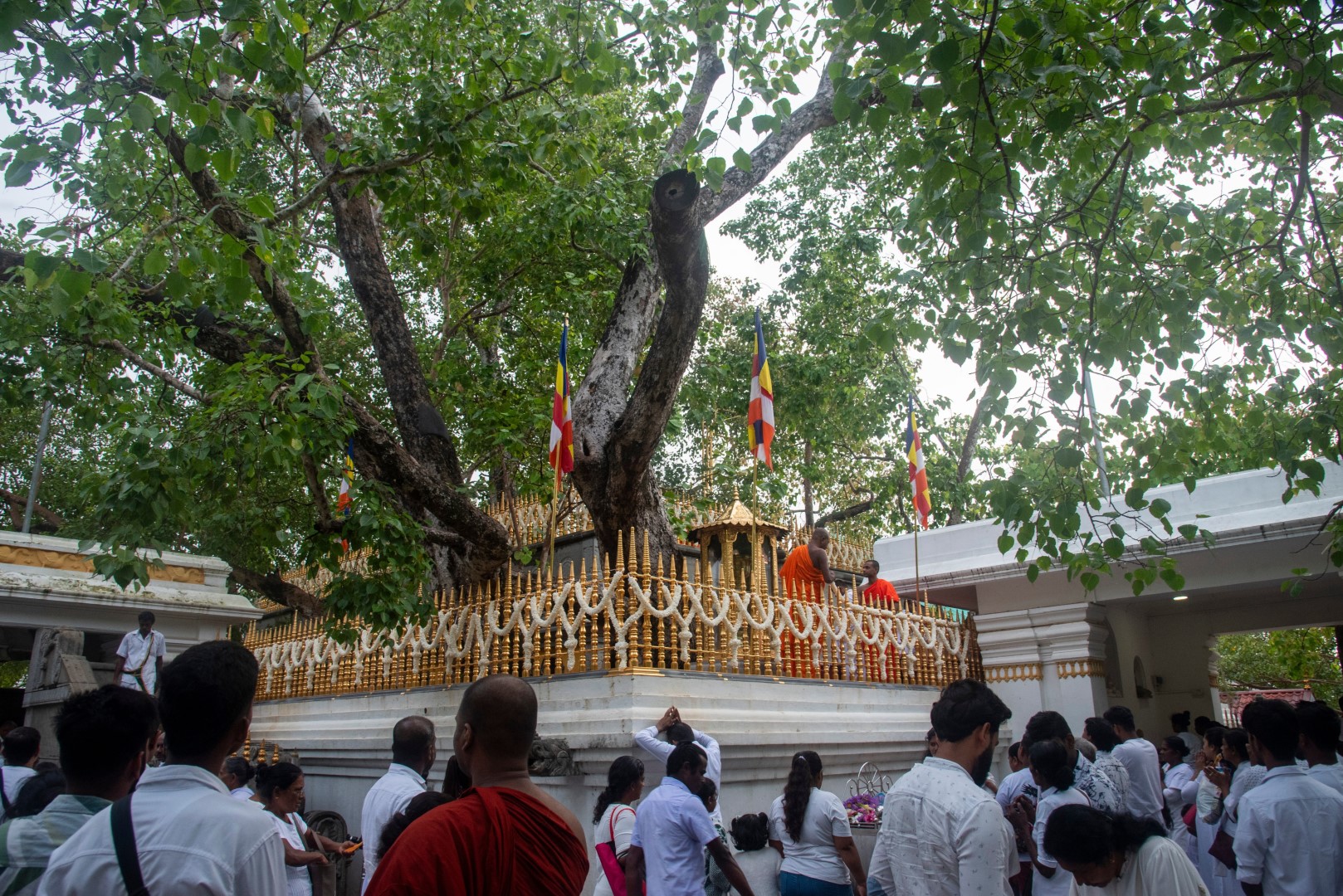
The sacred fig tree grown from a cutting of the original Bodhi tree under which the Buddha attained enlightenment is believed to be the oldest living human-planted tree on earth – over 2,300 years in the ground. It is also among the most intensively venerated religious objects in the Buddhist world, and observing the ritual offerings and prayers of the thousands of pilgrims who visit it daily is one of the most quietly moving experiences available in Sri Lanka.
Built in the 2nd century BCE by King Dutugemunu, the Ruwanwelisaya is one of the largest brick structures in the ancient world – a dome of whitewashed brick 55 metres in diameter at the base, rising to a height of 55 metres. The elephant frieze at its base, the surrounding courtyard of smaller votive stupas, and the continuous stream of white-clad pilgrims making offerings create a scene of extraordinary collective devotion.
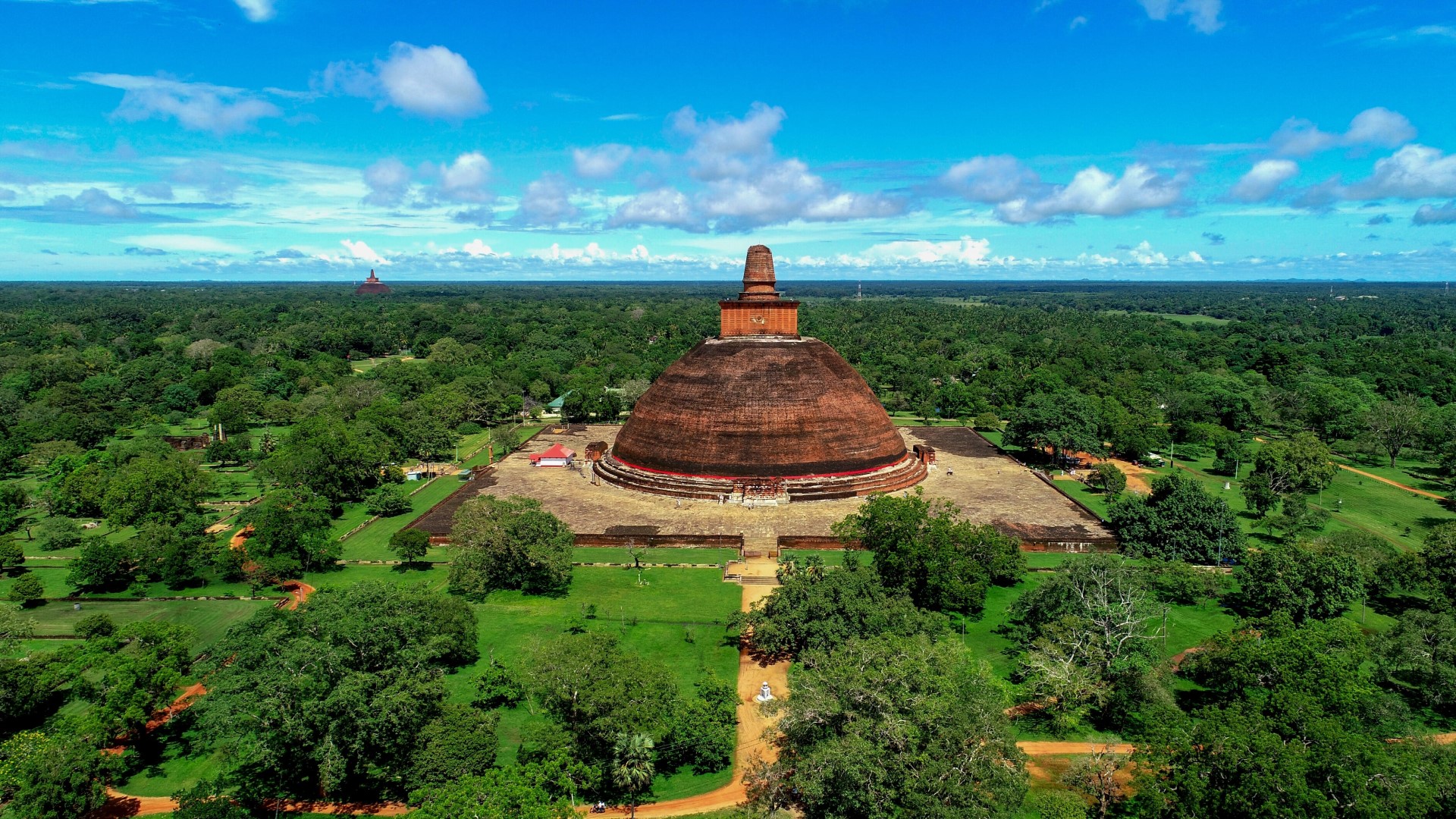
At the time of its construction in the 3rd century CE, the Jetavanaramaya was the third tallest structure in the world. The scale of the brickwork – 93 million bricks, each fired by hand – gives a concrete sense of the resources and organisational capacity of Anuradhapura at its height. The adjacent museum provides context and artefacts from the site’s excavation.
The hydraulic engineering of Anuradhapura – a network of reservoirs, canals, and sluices that irrigated several thousand square kilometres of paddy – is one of the great civilisational achievements of the ancient world. Cycling along the bunds of the Tissa Wewa and Nuwara Wewa tanks, with their bird-filled margins and reflections of distant stupas, provides a different dimension to the city – the practical infrastructure that made the spiritual architecture possible.
Six kilometres east of Anuradhapura, Mihintale is the site where Buddhism was formally introduced to Sri Lanka in 247 BCE – the hilltop location of a meeting between the missionary monk Mahinda and the Anuradhapura king Devanampiya Tissa. The 1,840 stone steps to the summit pass through successive terraces of ancient monastic buildings, relic shrines, and meditation platforms, arriving finally at a viewpoint from which the full extent of the ancient city becomes visible in the plain below.

