




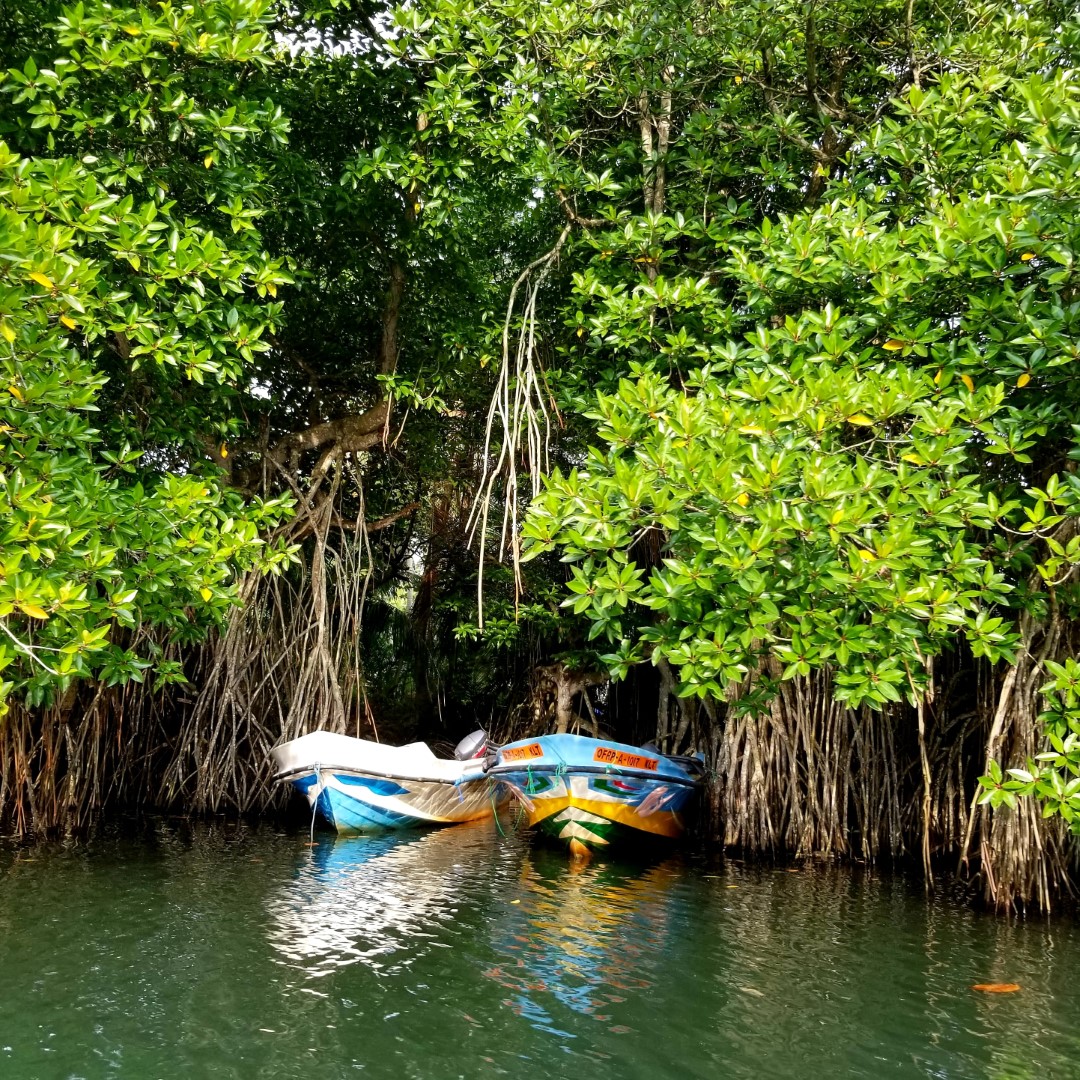
The boat journey through the Madu Ganga’s inner channel system passes beneath mangrove canopy that closes overhead to create a green tunnel of extraordinary density and quiet. Monitor lizards rest on exposed roots; kingfishers streak between branches; water monitors slide from the banks into the dark channel water. The guide navigates the route that delivers the greatest variety of habitat and wildlife based on current conditions.
One of the system’s 64 islands is home to a family that has cultivated cinnamon for generations – Sri Lanka’s native Cinnamomum verum, the world’s finest cinnamon variety, distinct from the cassia sold as cinnamon in most international markets. A brief stop here includes a demonstration of the peeling and drying process and context on the history of cinnamon as Sri Lanka’s most valuable colonial-era trade commodity.
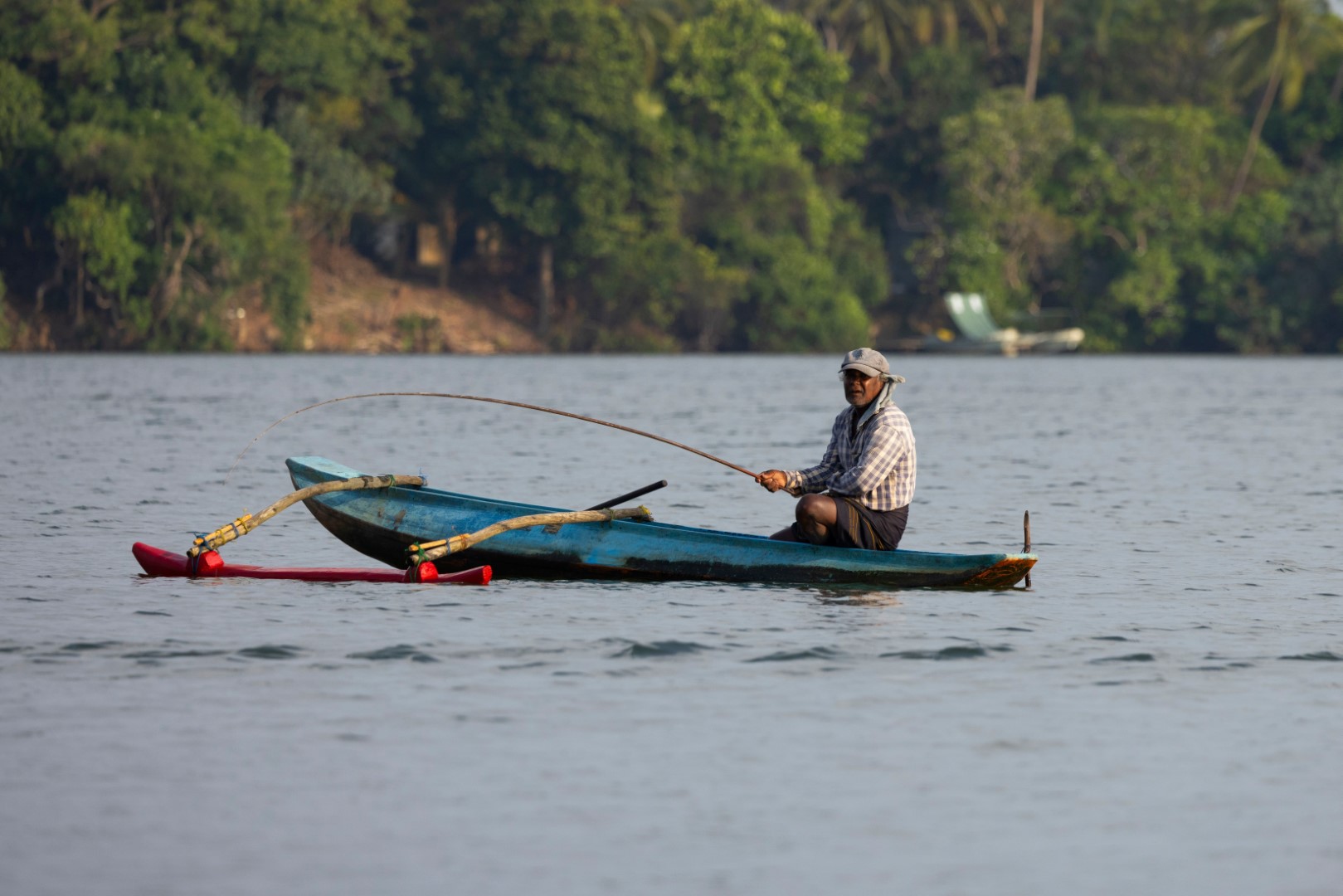
Several of the Madu Ganga’s islands host small Buddhist temples and the fishing families who maintain them. A brief interaction with these communities – mediated by the guide – provides a window into the lagoon economy and the relationship between the human and natural systems that share this wetland.
The Madu Ganga supports over 100 bird species including kingfishers, herons, egrets, cormorants, and the rare purple-faced langur monkey in the surrounding forest. The early morning is the most productive time for bird observation; the guide carries a field guide and has the identification knowledge to add depth to each sighting.

