




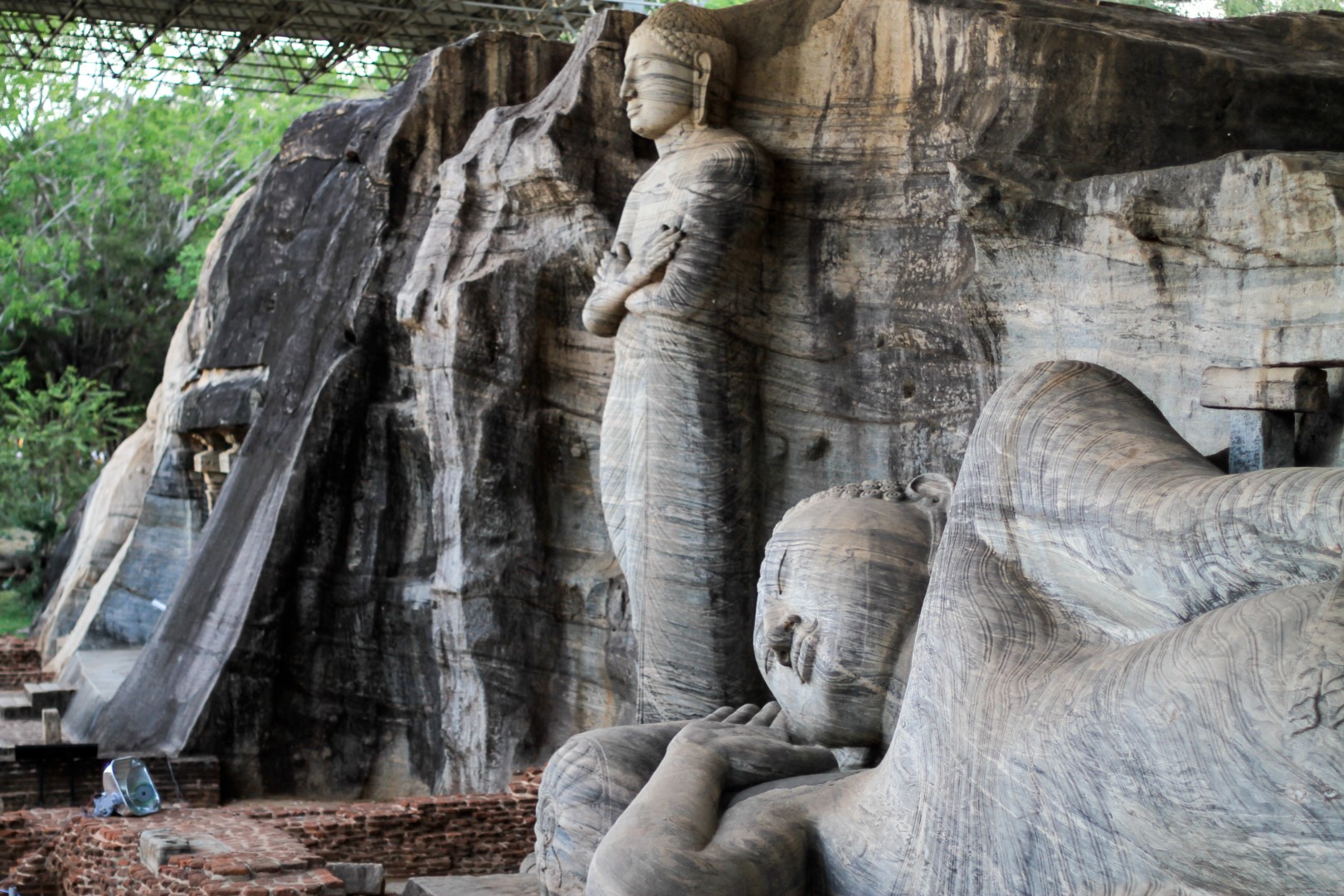
Carved from a single granite boulder in the 12th century CE, the Gal Vihara presents four figures of monumental scale and exceptional artistry: a seated Buddha in samadhi, a standing figure 7 metres tall whose expression has been described as one of the most serene in all of Buddhist art, a reclining Buddha 15 metres in length, and a smaller seated figure in a cave shrine. The quality of carving, at this scale, in granite, is without parallel in Sri Lanka.
The ruins of the Polonnaruwa royal palace rise to seven storeys in their surviving sections – a brick construction of considerable sophistication that gives a genuine sense of the scale and ambition of the Polonnaruwa court at its height. The audience hall beside it features elephant sculptures along its base that are among the finest decorative stonework in Sri Lanka.
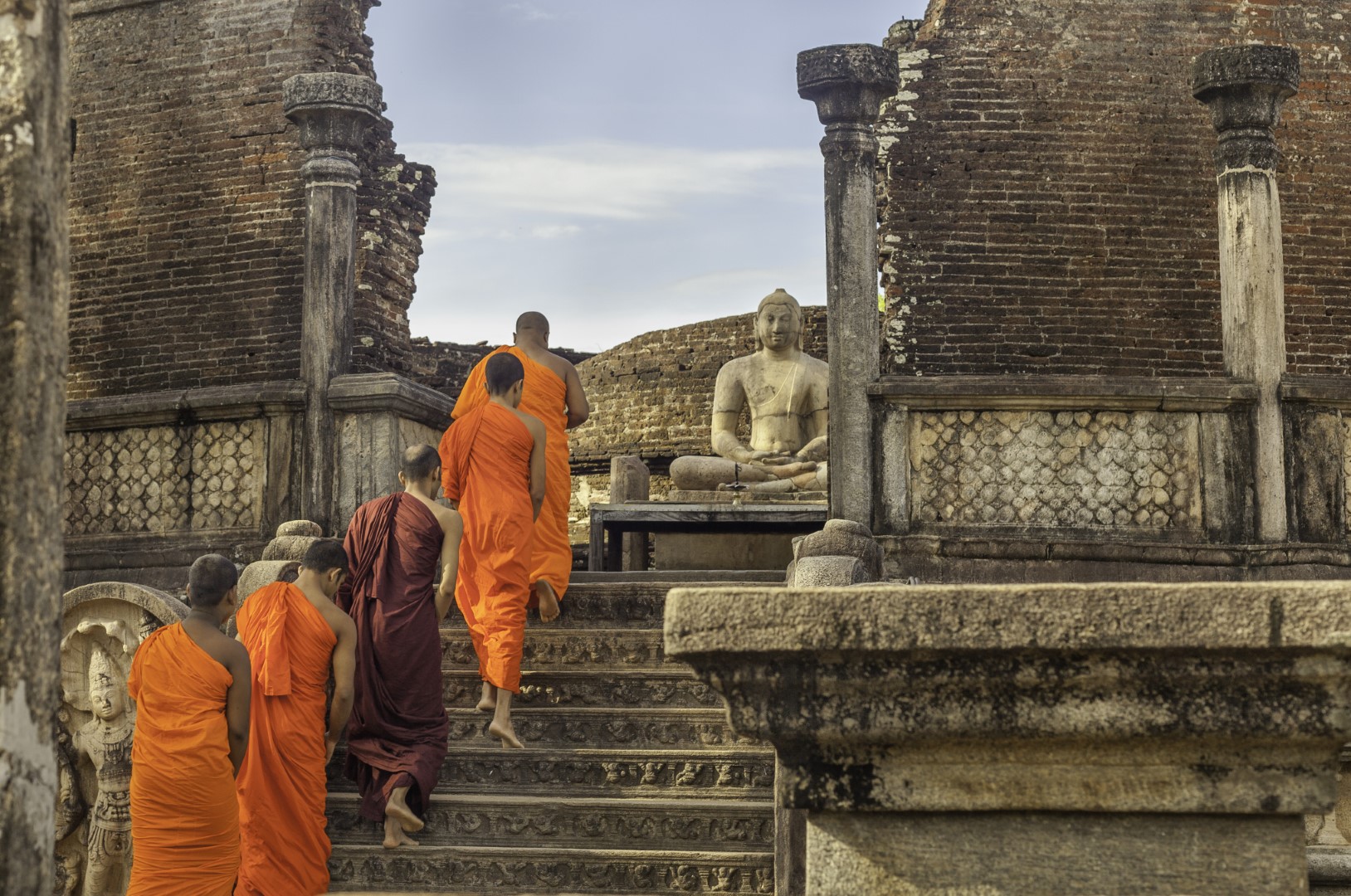
The Vatadage is a circular relic house of perfect geometric proportions – a mooned stupa platform reached through four entrance doorways aligned to the cardinal directions, each guarded by carved guardstones of exceptional quality. The design achieves a spatial clarity and symbolic coherence that makes it one of the most purely beautiful ancient structures in Sri Lanka.
These two image houses demonstrate the full range of Polonnaruwa’s architectural vocabulary – the Lankathilaka, with its soaring brick tower enclosing a standing Buddha image 18 metres tall, and the Thuparama, the oldest surviving gedige (stone image house) in Sri Lanka, whose intact corbelled roof creates an interior of extraordinary atmospheric quality.

