


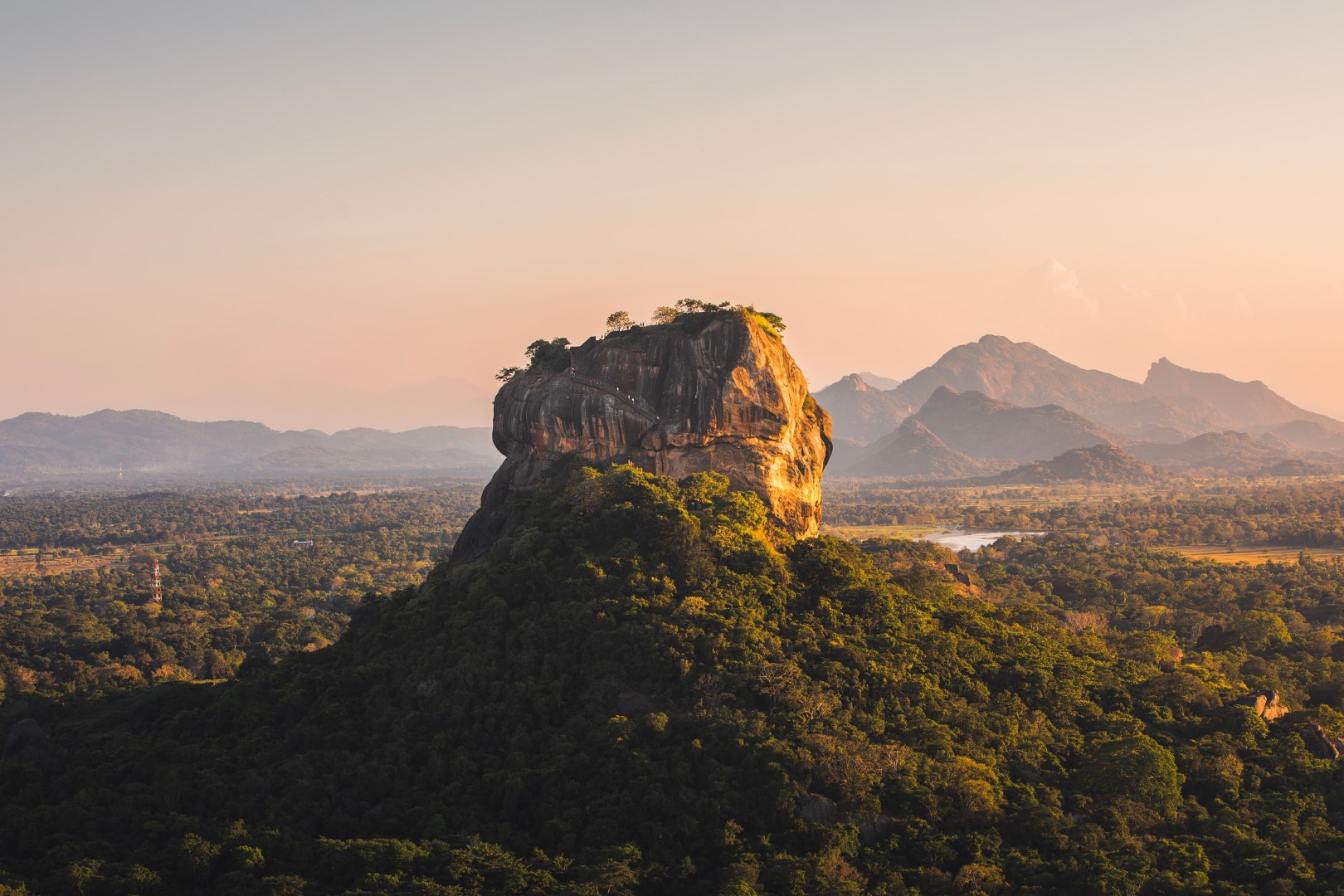


The ascent of Sigiriya passes through three distinct archaeological zones: the water gardens and boulder gardens at the base, the frescoes and Mirror Wall at mid-height, and the summit plateau where the palace foundations, throne room, and swimming pool of King Kashyapa’s extraordinary citadel survive in surprising completeness. Our guide explains the engineering achievement, the political circumstances, and the artistic sophistication of a site built in five years in the 5th century CE – and then abandoned to the forest for another thousand.
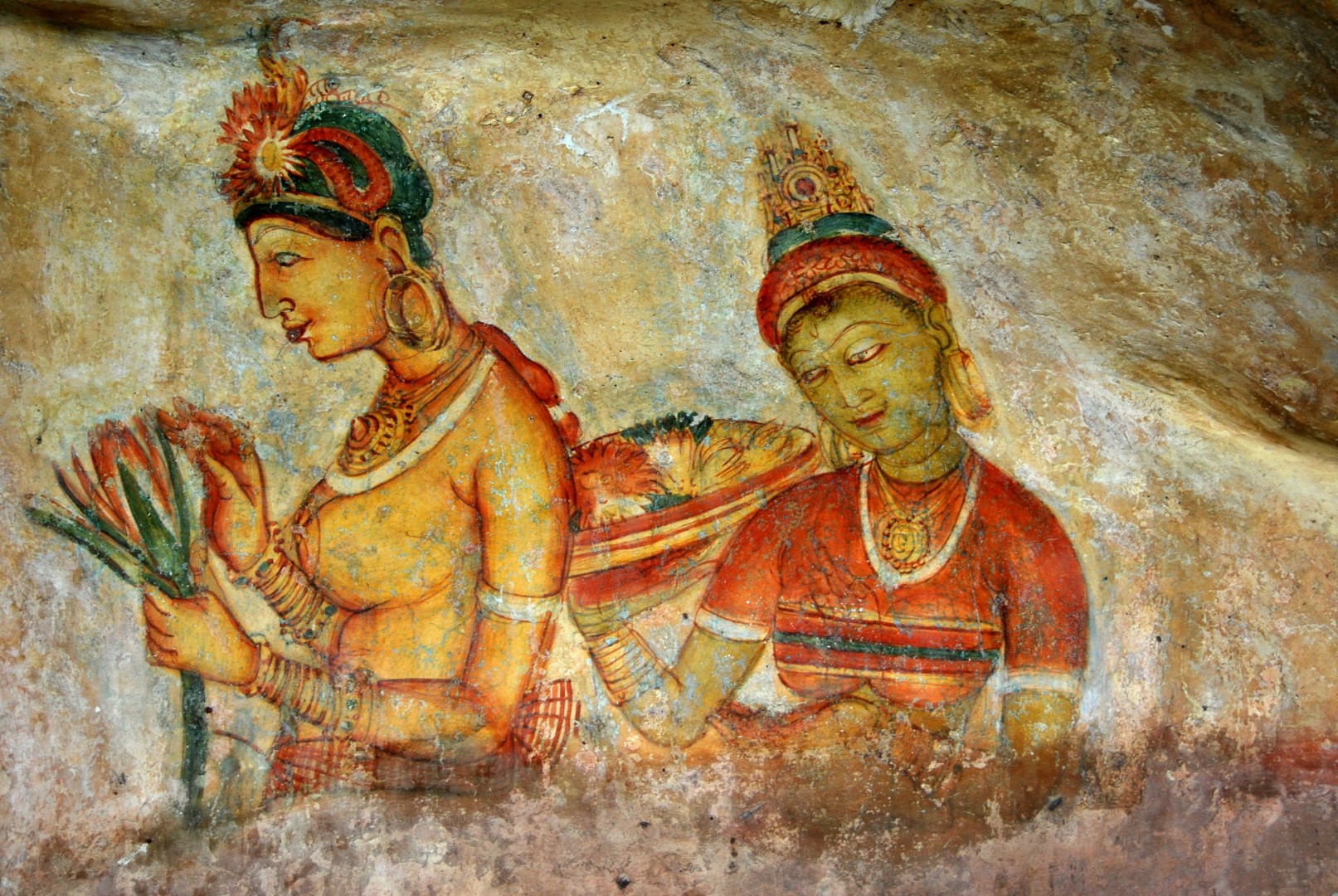
Painted in natural mineral pigments directly onto a rock face that overhangs the climbing pathway, the Sigiriya frescoes represent 21 surviving figures from an original composition that may have included 500 or more. The figures – idealised celestial women emerging from cloud – are among the finest surviving examples of ancient South Asian fresco painting and are extraordinary not only for their artistry but for the fact that they exist at all on the exposed face of a tropical rock summit.
Below the frescoes, a polished plaster wall was built that originally reflected the paintings above it. Later visitors – from the 6th century through to the 14th – left inscriptions on this surface: poems, observations, and reflections on the frescoes above that form one of the earliest examples of secular Sinhalese literature. Our guide translates selected examples and explains their significance in the history of the Sinhala language.
Five interconnected cave chambers contain a Buddhist art collection of extraordinary density and quality – statues of the Buddha in every mudra and material, painted ceilings that document the evolution of Sri Lankan Buddhist iconography across 22 centuries, and an atmosphere of cool, dimly lit reverence that feels ancient even to those accustomed to significant religious sites. Cave 2, the largest, contains a reclining Buddha 15 metres long surrounded by 40 standing figures.

