




Wilpattu’s villus function as natural waterholes, drawing animals from across the surrounding dry forest throughout the day. Positioning the safari jeep quietly beside a villu and waiting – something that time-pressured tourism rarely allows – produces sightings of animals behaving naturally: drinking, bathing, socialising, and going about their lives without any awareness of being watched. This is patient, genuinely wild wildlife observation.
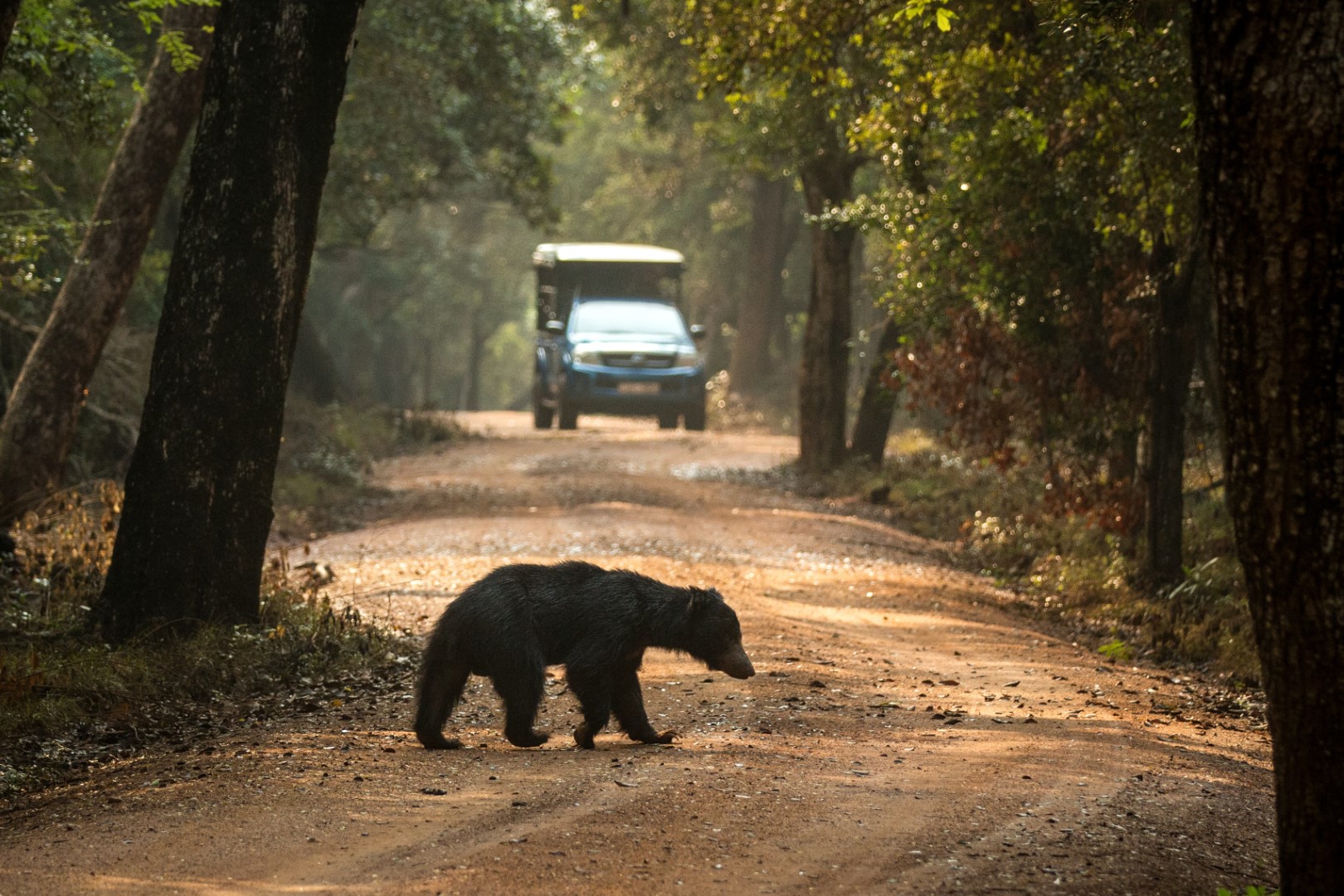
Wilpattu’s leopard population is growing in visibility as safari traffic increases and the animals grow accustomed to jeep presence. Sloth bears are reliably encountered in the forest margins at dawn and dusk – distinctive, stocky, and unpredictable, they are among Sri Lanka’s most characterful large mammals. Our guide’s knowledge of Wilpattu’s territory patterns significantly improves sighting rates for both species.
The road to Wilpattu passes several sites associated with the Ramayana and with early Sri Lankan history – including the location of Kudiramalai, an ancient port whose name (Horse Point) appears in classical texts describing trade between Sri Lanka and the Indian subcontinent. We include brief orientation stops at these sites for guests with interest in the historical geography of the region.

